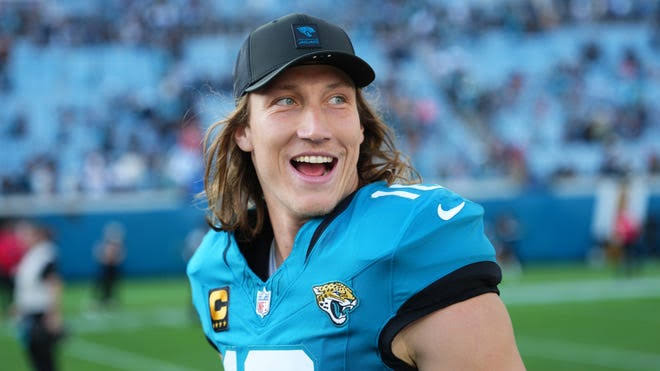
Trevor Lawrence did something Sunday that had NFL fans, fantasy managers and sports bettors collectively asking the same question:
“Why the hell did he do that?”
During the Jacksonville Jaguars’ 35-6 blowout victory over the New England Patriots on Sept. 27, Lawrence broke free on a third-down run and appeared to have a clear path to the end zone.
Instead of scoring, Lawrence slowed down and took a knee at the Patriots’ 1-yard line.
Yes. He voluntarily stopped short of a touchdown.
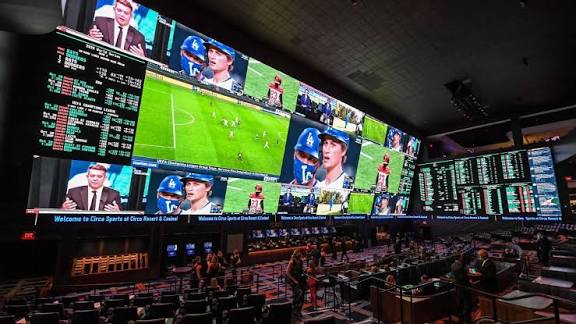
And because we live in an era where nearly every NFL play has a betting market attached to it, the reaction was immediate.
The Play That Had Bettors Furious
The Jaguars were already leading 28-6 with roughly eight minutes remaining in the fourth quarter. Lawrence had an opportunity to score what would have been a rushing touchdown.
Instead, he went down at the 1.
New England subsequently used a timeout, and Jacksonville’s Bhayshul Tuten scored a touchdown on the very next play.
Lawrence later acknowledged that, in hindsight, the decision probably wasn’t necessary.
His explanation was that he was attempting to keep the clock running and limit New England’s opportunities to come back. He also joked that he wanted to help Tuten’s fantasy football managers.
Lawrence had three touchdown passes in the game, and the Jaguars ultimately won by 29 points.
So from a football perspective, there is a reasonable explanation.
But from a gambling perspective?
That’s where things get interesting.
Did Lawrence Just Cost People Money?
Anytime touchdown markets are one of the most popular player-prop bets in football.
And Lawrence had been listed by sportsbooks and betting analysts as an anytime touchdown candidate heading into the game. One Week 3 betting preview specifically recommended Lawrence in the anytime-touchdown market.
That means there were almost certainly bettors who had money riding on Lawrence scoring a touchdown.
Then Lawrence had a wide-open path to the end zone and voluntarily stopped at the 1.
For those bettors, it was an absolutely brutal way to lose a wager.
But there’s a massive distinction that needs to be made:
A strange play that affects a bet is not evidence that a game or prop was fixed.
There is currently no evidence presented by the NFL or any credible investigative source showing that Lawrence intentionally avoided scoring because of a gambling wager.
In fact, Lawrence publicly gave a football-related explanation for the decision and acknowledged afterward that he probably should have scored given how much time remained.
Why People Are Going to Be Suspicious Anyway
The reaction isn’t difficult to understand.
Sports betting has fundamentally changed the way fans watch games.
A decade ago, a quarterback voluntarily going down at the 1-yard line might have been viewed as an unusual clock-management decision.
Today, someone watching the same play might have money on:
- Lawrence to score a touchdown
- Lawrence to score 2+ touchdowns
- Lawrence rushing yards
- Jacksonville’s team total
- The game total
- A same-game parlay involving Lawrence
One decision can affect numerous betting markets simultaneously.
That’s why unusual player decisions naturally receive more scrutiny in the modern NFL.
And the NFL itself recognizes that gambling creates integrity risks.
The NFL Takes Game Manipulation Seriously
The league has extensive gambling policies prohibiting players from betting on NFL games, manipulating games or plays, and sharing confidential information.
The NFL also uses betting-monitoring systems and integrity representatives to identify potentially suspicious activity. The league has said its monitoring partners look for betting activity that could indicate game manipulation or the improper use of nonpublic information.
The league’s current policy also makes the distinction between simply making an unusual football decision and intentionally manipulating a game.
Actual or attempted game fixing can result in a permanent NFL ban.
That’s an extremely serious standard.
And that’s exactly why it’s important not to jump from “that looked bizarre” to “the game was fixed.”
Those are two very different claims.
The Timing Makes the Play Look Even Stranger
There’s another reason the Lawrence play generated so much attention.
Taking a knee at the 1-yard line is a completely legitimate football strategy when the situation calls for it.
If you’re leading late in the fourth quarter and scoring immediately would give your opponent unnecessary time with the ball, going down before the goal line can be smart.
But Lawrence himself admitted there were still approximately eight minutes remaining.
After realizing how much time was left, he acknowledged that the decision was probably unnecessary.
And because Jacksonville scored on the next play anyway, the clock-management strategy didn’t ultimately produce the enormous advantage Lawrence appeared to be seeking.
That’s what made the sequence so bizarre.
So… Was It a Gambling Fix?
There is no evidence at this point that it was.
The play certainly affected people who bet on Lawrence to score, and it understandably generated speculation online.
But speculation is not proof.
Lawrence has provided an explanation: he was trying to drain the clock and give Jacksonville’s opponent fewer opportunities to get back into a game that was already essentially decided. He also joked about helping Tuten’s fantasy managers.
The Jaguars won 35-6.
Lawrence threw three touchdown passes.
There is no reported indication from the NFL that the play is being investigated as gambling-related misconduct.
Still, the incident illustrates a much bigger issue facing professional sports.
When millions of dollars are wagered on individual player statistics, even an innocent football decision can suddenly look suspicious.
And that’s the uncomfortable reality of the modern NFL.
Maybe Lawrence simply made a bizarre clock-management decision.
Maybe he saw the situation differently in real time.
Maybe he simply wanted Tuten to get the touchdown.
Whatever the explanation, one thing is certain:
If you had Trevor Lawrence anytime TD yesterday, watching him voluntarily take a knee at the 1-yard line probably felt a lot worse than the 35-6 final score suggests.


Leave a comment