
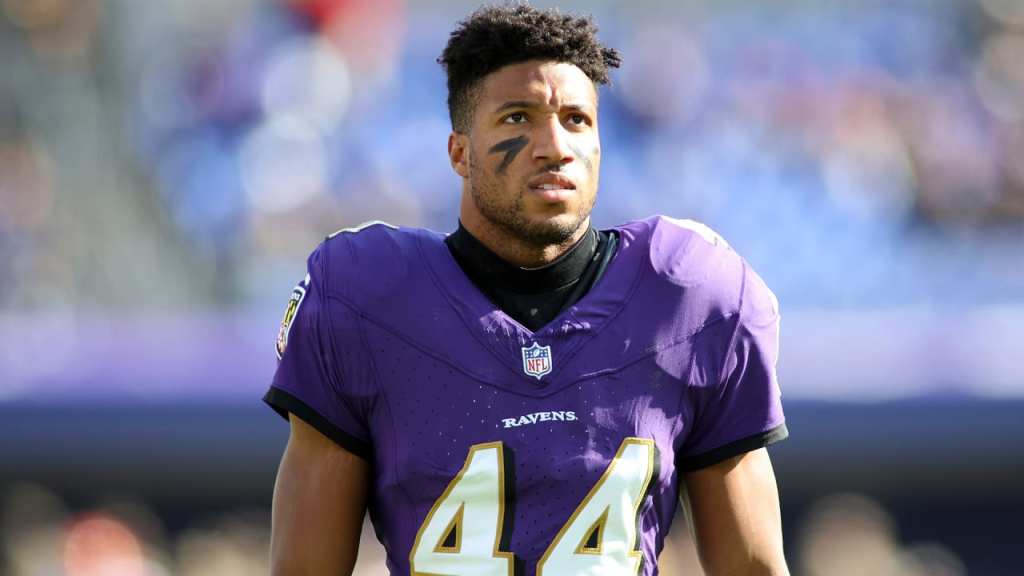
Sometimes the truth isn’t particularly flattering. Baltimore Ravens cornerback Marlon Humphrey found that out the hard way after making a comment about the city of Baltimore that quickly turned into a controversy. But instead of immediately condemning the delivery, perhaps people should spend more time discussing the underlying issue.
During an episode of The Marlon Humphrey Show, the Ravens defensive back was asked what Baltimore was best at making. After mentioning a few things associated with the city, Humphrey delivered an answer that quickly went viral.
“They’re best at making criminals,” Humphrey said.
It was a blunt response, certainly not the most politically correct thing to say, and one that Humphrey probably knew would generate a reaction. But does that automatically make the underlying criticism invalid?
Baltimore has spent decades battling violent crime, poverty, and deeply rooted socioeconomic problems. These aren’t issues that suddenly appeared because an NFL player made a joke on his podcast. They are longstanding problems that residents, community leaders, and elected officials have been dealing with for generations.
According to the Council on Criminal Justice, Baltimore recorded a homicide rate of 35.2 per 100,000 residents in 2024. That’s a staggering figure that illustrates the scale of the city’s public safety challenges.
There has been meaningful progress. Baltimore recorded 133 homicides in 2025, a 31% decrease from the previous year and its lowest annual total since 1977. That’s encouraging, but a significant improvement doesn’t mean the underlying problems have disappeared.
So when Humphrey makes a comment about Baltimore’s relationship with crime, why is the immediate reaction to attack the person saying it rather than have a serious conversation about why the problem exists?
The Problem Isn’t That Humphrey Said It. It’s That People Don’t Want to Hear It.
Baltimore isn’t the only American city dealing with serious crime problems. Communities across the country, particularly struggling urban neighborhoods, continue to deal with violence, gang activity, drug-related crime, and cycles of poverty that have proven difficult to break.
These are uncomfortable conversations, but pretending the problems don’t exist doesn’t help anybody.
There is a legitimate discussion to be had about the conditions that contribute to crime in struggling communities. Economic opportunity, education, family stability, neighborhood investment, policing, and accountability all deserve attention.
None of that means residents of Baltimore should be labeled criminals. The overwhelming majority of people living in the city are simply trying to work, raise families, and build better lives.
But acknowledging that distinction shouldn’t require everyone to pretend that Baltimore doesn’t have a serious public safety problem.
Why Is Accountability Only Part of the Conversation When It’s Convenient?
Following the backlash, Humphrey apologized for his comments, acknowledging his connection to the city after spending his entire NFL career with the Ravens, welcoming a son there, and investing in Baltimore and the surrounding state.
However, Baltimore Mayor Brandon Scott wasn’t satisfied with the apology.
Scott said a verbal apology wasn’t enough, pointing to the young Black boys throughout Baltimore who look up to Ravens players and suggesting Humphrey’s comments could negatively affect how they view themselves and their community. He also invited Humphrey to meet with formerly incarcerated residents who are now working to prevent others from making similar mistakes.
It’s a fair point that public figures should understand the influence their platforms carry.
But shouldn’t that same expectation apply to the people responsible for addressing the problems Humphrey was referencing?
If Baltimore has struggled with violent crime for decades, residents deserve more than statements about how much everyone loves the city. They deserve continued progress, meaningful investment, and accountability from the institutions and leadership responsible for public safety and opportunity.
A city can have wonderful people, passionate sports fans, rich history, and tremendous culture while simultaneously having serious problems that need to be addressed.
Those things aren’t mutually exclusive.
Criticizing a City Doesn’t Mean You Hate Its People.
There is a difference between insulting an entire population and criticizing a city’s persistent problems.
Humphrey’s wording was certainly broad, and his joke painted Baltimore with an unnecessarily negative brush. But the reaction also raises an interesting question: Have we become so uncomfortable with criticism that we spend more time debating how something was said than examining whether there’s a legitimate issue behind it?
Baltimore’s recent crime reductions deserve recognition. So does the work being done by community organizations, law enforcement, and residents trying to make their neighborhoods safer.
But progress and accountability should go hand in hand.
If anything, the conversation surrounding Humphrey’s comments should serve as an opportunity to discuss why certain communities continue to struggle with crime and what can be done to change that.
Instead, the conversation has largely become about whether Humphrey should apologize.
He already did.
Maybe it’s time to spend less energy being offended by the messenger and more energy addressing the message.
Because Baltimore doesn’t have a reputation problem that can be fixed with an apology. It has real challenges that require real solutions. And acknowledging those challenges is the first step toward addressing them.




Leave a Reply