
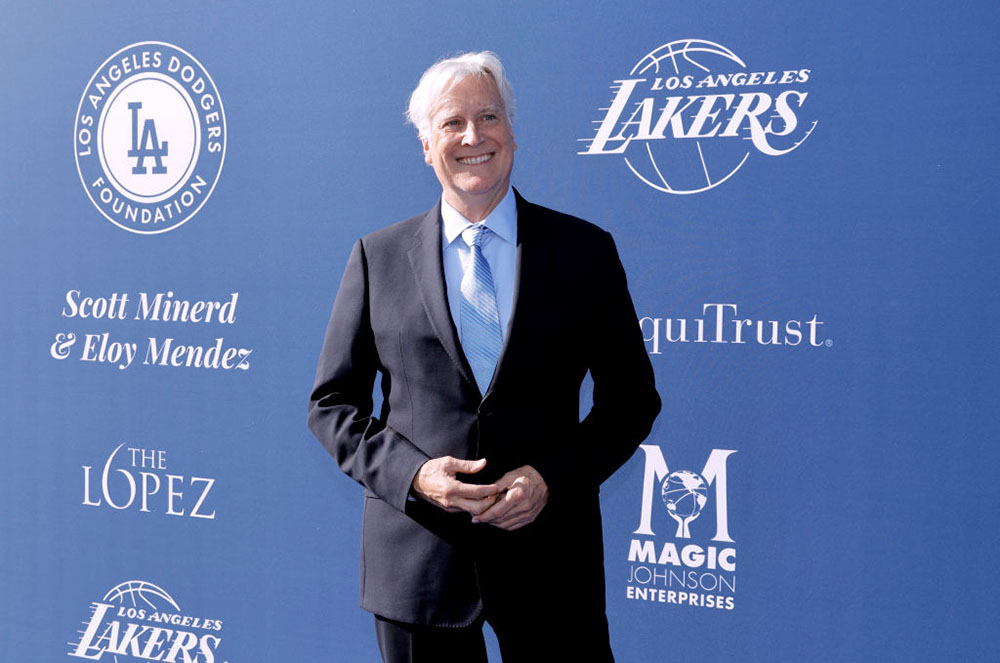
The Los Angeles Dodgers have spent the last few years making baseball feel like an unlimited-budget video game.
Shohei Ohtani? Check.
World Series? Check.
Massive contracts? Check.
Financial scandal involving the billionaire owner?
Well… apparently that’s on the roster now, too.
Dodgers controlling owner Mark Walter is at the center of an ongoing federal investigation into the financial dealings of companies connected to his enormous business empire.
And before anyone starts calling this the next Bernie Madoff situation, let’s pump the brakes.
Walter has not been charged with a crime, and the investigation is ongoing.
But there is some very real and very unusual evidence that has attracted the attention of federal prosecutors, the SEC, insurance regulators and credit-rating agencies.
And when your billionaire sports owner starts appearing in financial headlines for things that require a flowchart to explain, that’s usually not ideal.
So What Exactly Is Going On?
The story revolves around companies connected to Walter’s business empire and, specifically, two insurance companies he controls: Delaware Life Insurance Co. and Clear Spring Life and Annuity Co.
Federal prosecutors and the Securities and Exchange Commission are investigating whether billions of dollars in loans and investments involving companies connected to Walter were properly disclosed.
According to reporting from the Los Angeles Times and Wall Street Journal, the investigation initially focused on roughly $16 billion in loans that had not been properly identified as related-party transactions.
Then things got even crazier.
An internal review ultimately led the insurers to reclassify roughly $21 billion in investments as related-party assets, according to Fitch and the Los Angeles Times.
Yes.
Billion. With a B.
For perspective, that’s enough money to make the Dodgers’ payroll look like the contents of your couch cushions.
What Is a “Related-Party” Transaction?
This is the part where the story gets boring.
Stick with me.
A related-party transaction basically means you’re doing business with someone—or some company—that is connected to you.
Imagine owning a bank, then borrowing money from your own bank to buy your other company.
That isn’t automatically illegal.
But regulators understandably want to know about it.
Why?
Because there is a potential conflict of interest.
If you’re dealing with an unrelated company, both sides theoretically negotiate based on their own interests.
But when you’re effectively doing business with yourself, regulators want to know whether the deal was conducted fairly and whether investors, creditors or policyholders were properly protected.
As the Los Angeles Times explained, related-party transactions receive additional scrutiny because they can create opportunities to manipulate valuations, repayment terms or financial reporting.
Basically:
It’s not necessarily illegal to sell yourself something.
But regulators are probably going to have some questions when you sell yourself something for $400 million and then say, “Don’t worry about it.”
Here’s Where It Gets Really Interesting
The insurance companies involved initially reported dramatically less exposure to related-party investments.
Delaware Life had previously reported roughly $1 billion, or about 3% of its investment portfolio, in affiliated investments.
After an internal review, that figure jumped by roughly $16 billion.
Fitch later reported that the two insurers’ related-party exposure had risen to approximately 40% of their portfolios—the highest exposure among North American life insurers it rates.
That’s not a rounding error.
That’s the financial equivalent of checking your bank account and discovering you accidentally bought a yacht.
And Then Federal Investigators Showed Up
The insurers disclosed that they received grand jury subpoenas in February 2026 related to an investigation by federal prosecutors in Manhattan.
The SEC is also conducting a parallel investigation.
Authorities are examining whether loans and investments involving Walter’s companies were improperly structured or disclosed.
The Los Angeles Times also reported that federal authorities seized Walter’s cellphone and laptop as part of the investigation.
Again, that does not mean Walter has been found guilty of anything.
But when federal investigators take your phone and laptop, it’s probably safe to say you’re having a worse week than the guy who gets called out at Dodger Stadium for catching a home-run ball and throwing it back.
Why Does This Matter to the Dodgers?
Here’s where baseball fans should actually care.
Walter isn’t just some random billionaire whose name happens to appear on the Dodgers’ ownership paperwork.
He is the controlling owner of one of baseball’s most valuable and aggressive franchises.
The Dodgers were purchased by Walter’s Guggenheim-led ownership group in 2012 for $2.15 billion.
Since then, the franchise has become one of the biggest financial machines in baseball.
And Walter’s broader sports empire has expanded dramatically.
He has been involved with the Dodgers, Chelsea FC, the Lakers and other major sports properties.
That makes the investigation considerably more interesting to the sports world because his businesses and sports holdings are part of the same enormous financial ecosystem.
And Then He Sold the Lakers
This is where the timing gets… interesting.
Walter agreed to sell his majority stake in the Los Angeles Lakers at a valuation of $12.5 billion.
He had acquired the controlling interest just over a year earlier.
The timing naturally led to speculation that the sale was connected to the financial pressure surrounding his business empire.
Walter’s representatives have pushed back on that interpretation, and Dodgers president Stan Kasten has said the Lakers situation is separate from the Dodgers.
But Reuters reported that Walter’s insurance company is planning to divest as much as $6.5 billion in investments linked to his business interests, replacing them with unaffiliated assets.
So while there is no verified evidence that the Dodgers are being sold, the broader financial restructuring is very real.
Does This Mean the Dodgers Are in Trouble?
Not right now.
This distinction is extremely important.
There is currently no evidence that the Dodgers themselves are financially insolvent or that the franchise is being forced to sell.
Dodgers president and CEO Stan Kasten has publicly pushed back on speculation about a potential Dodgers sale, saying the Dodgers and Lakers are separate businesses.
And Walter’s business representatives have maintained that he and TWG Global have acted in good faith.
The investigation could ultimately result in no criminal charges.
That’s why it’s irresponsible to call this “Mark Walter’s fraud” as though a conviction has already happened.
A more accurate description is:
Federal investigators are examining whether companies controlled by Walter improperly handled or disclosed billions of dollars in related-party investments.
That’s serious enough without inventing the ending.
The Numbers Are What Make This Story So Wild
Let’s recap:
$2.15 billion — What Walter’s group paid for the Dodgers in 2012.
$16 billion — The amount of previously undisclosed loans initially at the center of the investigation.
$21 billion — The broader amount of related-party investments later identified by Fitch’s analysis.
40% — Approximately the share of the insurers’ portfolios represented by related-party loans after the restatement.
$6.5 billion — Investments Delaware Life plans to divest as part of the restructuring.
$12.5 billion — The valuation involved in Walter’s agreement to sell his Lakers stake.
And somewhere in the middle of all this, the Dodgers are trying to win another World Series.
Because apparently running a baseball team wasn’t enough.
The Dodgers’ Biggest Problem May Be the Questions
For now, Dodgers fans don’t need to panic.
There is no evidence that the team is going bankrupt, no announced plan to sell the Dodgers and no criminal charge against Walter.
But there are legitimate questions about the financial structure surrounding the team’s controlling owner.
And those questions aren’t coming from random people on X who think every bad pitch is evidence of a conspiracy.
They’re coming from federal prosecutors, the SEC, insurance regulators and credit-rating agencies.
That’s what makes this story worth watching.
The Dodgers have built one of the most powerful organizations in baseball by spending money at a level that makes other owners look like they’re shopping with a coupon.
Now their owner is facing scrutiny over a financial empire involving tens of billions of dollars in related-party investments.
The irony is almost too perfect.
The Dodgers have spent years telling baseball:
“We’re not worried about the luxury tax.”
Now Mark Walter’s accountants are apparently saying:
“We’re not worried about the luxury… wait, actually, can everyone come into this meeting?”
The investigation is still unfolding.
And until investigators reach a conclusion, the most important thing to remember is simple:
There are serious allegations and major financial discrepancies—but there has not been a finding that Mark Walter committed a crime.
For the Dodgers, the baseball operation continues.
For Walter, however, the biggest game of the season might be happening somewhere far away from Dodger Stadium—and there aren’t nine innings to get out of this one.




Leave a Reply